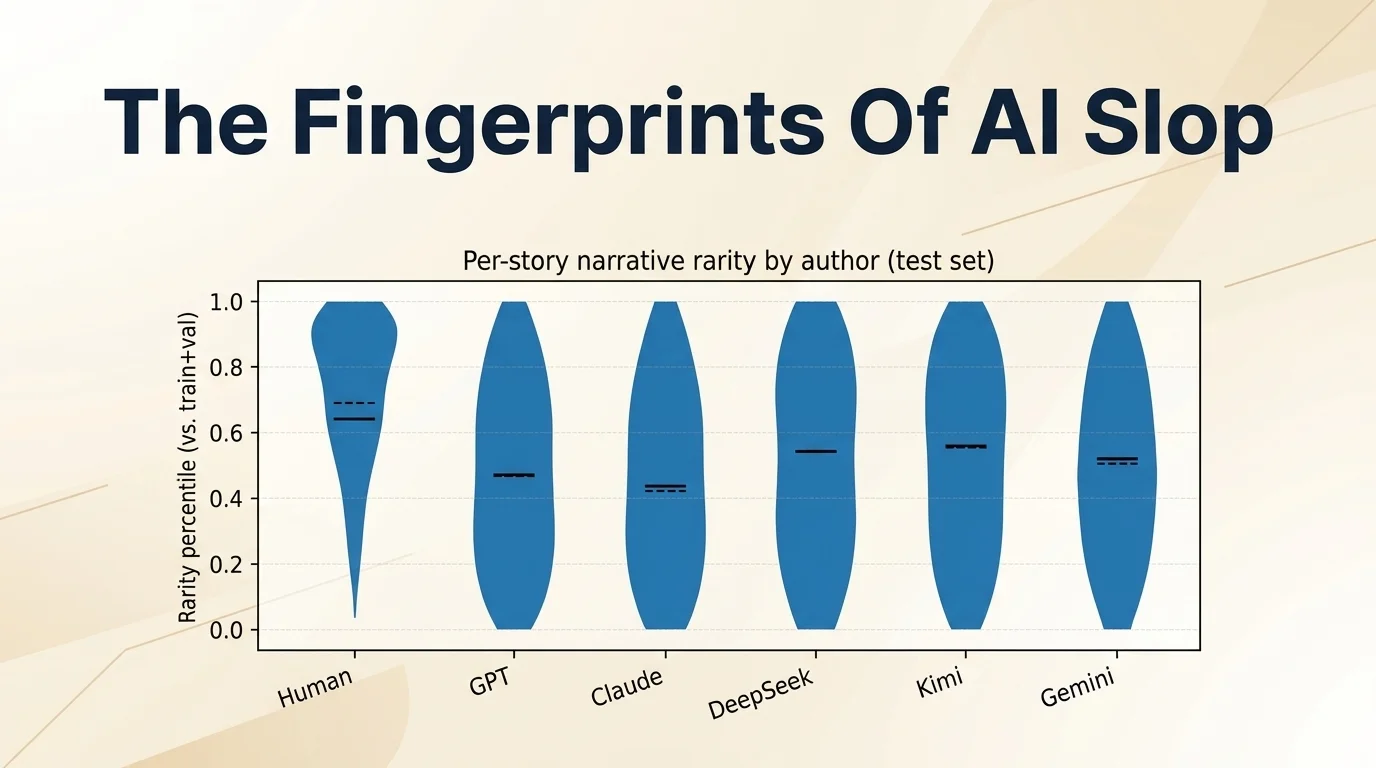
Meet StoryScope: Research That Exposes How Google Might Detect Fingerprints of AI Slop
On April 13, a research team posted the fourth revision of a paper to arXiv. Four of the authors work at the University of Maryland. The fifth works at Google DeepMind.
Nobody in SEO noticed.
I intend to fix that, because its 61,608-story dataset produced the most uncomfortable finding I have read since the Content Warehouse leak. AI-generated content carries a structural fingerprint. Not word choice. Not the em dashes everyone jokes about. Structure. The researchers threw away every stylistic signal, looked only at the shape, and still caught the machine 93 times out of 100.
Then they ran the AI text through professional-grade humanizing edits.
They still caught it.
If your content operation runs on the assumption that a decent humanizer makes AI text invisible, pull up a chair.
The Study That Gave AI Slop a Fingerprint
AI slop is low-effort, mass-produced AI-generated content, and AI slop now carries a structural fingerprint. StoryScope, a 2026 study co-authored by a Google DeepMind researcher and released on GitHub, detected AI-generated stories with 93.2% accuracy from structure alone, and humanizing edits barely dented the slop signal. Style is easy to scrub. The shape of AI slop is not.
The term "slop" stuck fast as the text-and-image sibling of spam, a label for the flood of low-quality generative AI content online: slop images, slop videos, slop articles. What nobody had was a way to measure any of it structurally. Now they do.
They took 10,272 human-written stories, reverse-engineered a prompt from each, then fed those prompts to five generative models: Claude, GPT, Gemini, DeepSeek, and Kimi. Six versions of every story, one human and five machine. They converted each story into a structured template across ten narrative dimensions, 304 features per story. Things like: does the narrator explain the theme out loud? Does the timeline ever jump? Does any person in the story make a choice the narrator refuses to judge?
The software doing the detecting is deliberately simple, closer to what banks use for credit scoring than to a mysterious neural net, and every catch can be traced back to the exact feature that gave the machine away. It is a receipt printer, not a black box.
Quick caveat, because precision matters. This is a University of Maryland project with one DeepMind co-author, not an official Google product. Google did not build this detector. Keep that in mind, because what Google did build is worse.
AI Content Detection Is Dead
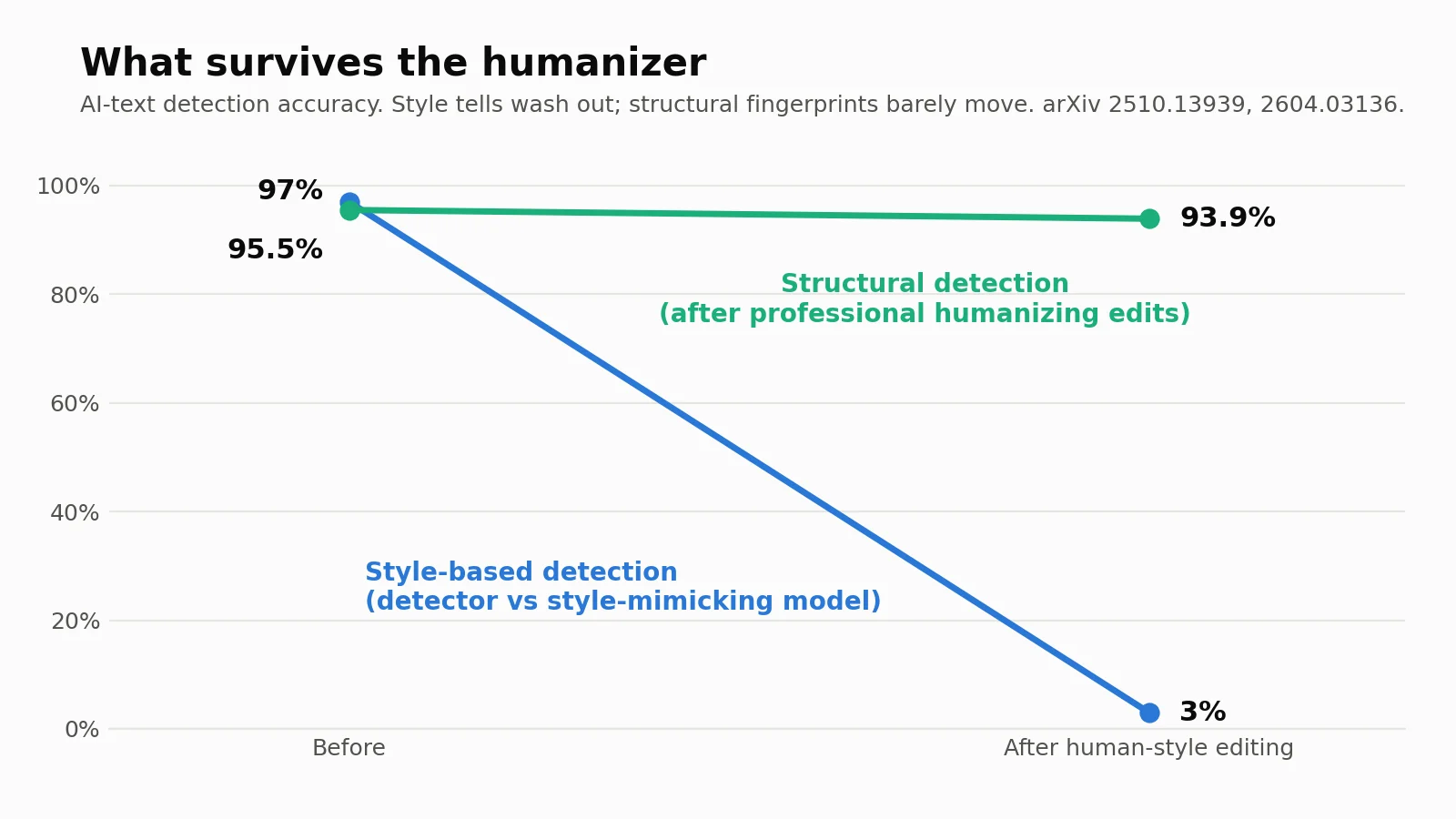
The kind you have heard of, anyway. OpenAI shut down its own AI text detector in July 2023 for a "low rate of accuracy." GPT 5.4 already cut back the em-dash habit, and fine-tuning a model to mimic human style drops detection on creative writing from 97% to 3%. Three percent. The tells you have been hunting, the em dashes, the word "delve," the sentences that all sound like the same LinkedIn post, are a temporary costume, and every new model version takes even more of it off. For the AI slop farms, style is a solved problem.
Structure is a different animal.
There is a scene in Inglourious Basterds where an undercover Brit nearly pulls it off. Perfect German, perfect uniform, perfect accent. Then he orders three glasses and holds up the wrong three fingers, and every gun in the bar comes out. Style is the accent. Structure is the fingers.
The researchers tested exactly that with LAMP, an editing framework built with professional writers to strip out cliché and purple prose. LAMP is the humanizer concept done about as well as it can be, and better than the browser tab you have open right now.
Detection dropped from 95.5% to 93.9%.
A 1.6 point dent. The edit fixed the accent. The fingers still gave it away.
What a humanizer actually does
It works at the sentence level: swap flagged words, kill em dashes, vary sentence length, break up paragraphs, rewrite the phrasing detectors catch. Useful, as far as it goes. And every fix is cosmetic.
What it misses
Everything above the sentence. AI explains its own theme to the reader 77% of the time; human writers, 52%. AI builds tidy, single-track arguments that march from setup to conclusion; humans jump around, double back, and leave loose ends. Humans talk directly to the reader four times as often. A humanizer cannot add an opinion you never had, a story you never lived, or a structural choice you never made. In the authors' words, removing the fingerprint "requires significant structural rewrites rather than simple post-hoc edits." The skeleton stays.
Yes, They Studied Fiction. But SEOs Are Not Off the Hook
I want to be straight about scope, because the people who sold you AI content advice never are. StoryScope studied fiction. Short stories, roughly 5,000 words each. The paper makes no claims about blog posts, service pages, or the 4,000 near-identical articles your competitor published last quarter. Anyone telling you it proves Google detects AI blog content is overselling it, and you should ask what else they oversold.
Here is why it should worry you anyway. Your non-fiction content has narrative structure too. The intro that makes a promise. The sections that explain their point, then explain it again. The conclusion that moralizes on cue. The paper calls this over-determination: AI "spells out meaning rather than trusting the reader to infer it." The same structural tells show up in a listicle as in a short story. If that sentence did not describe most of the AI-generated content published online in the last two years, I would eat my crawl logs.
New research on non-fiction slop is already arriving. A Northeastern-led team built the first formal framework for measuring slop in text, scored writing on coherence, relevance, factuality, and tone, and found slop in roughly 35% of the web text samples they pulled.
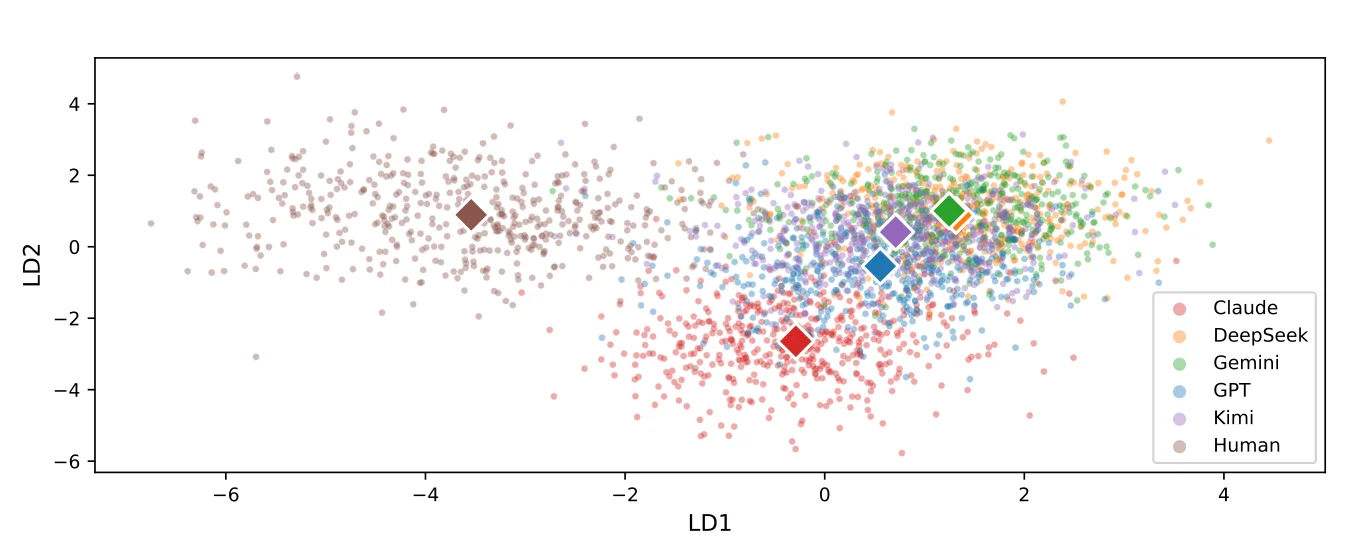
Also, the models rat each other out: structure alone identifies which model wrote a story 68.4% of the time. Claude writes with restraint and flat escalation. GPT loves dream sequences and gossip as a plot engine. Gemini defaults to bleak settings with tidy endings. Kimi sits at what the authors call the generic center of the AI distribution, the most brutal sentence ever published in a methods paper. Every model has a signature, including the one that created your product descriptions.
Publishing already lives with this. A detection audit covered by the New York Times flagged nearly 20 percent of 14,000 self-published Amazon novels as substantially AI-written, up 41% in a year.
Google Is Already Grading Your Effort
Does Google run anything like this in production? They will never tell you, but what leaked from their own systems answers enough of it.
Buried in the 2024 Content Warehouse leak, inside a module Google uses to score page quality, sits an attribute named contentEffort. Google's own documentation defines it as an LLM-based effort estimation for article pages. Read that twice. Google feeds your article to a language model and has it estimate how much human work went into it. Not whether AI wrote it. How much effort it can smell on the page. The same class of model that writes the slop is grading the slop.
How does a machine score something as human as effort? The same way a self-driving car spots a stop sign. It does not measure every octagon against a master list. It learned the pattern from a million stop signs and flags a new one on sight. contentEffort works the same way. Google is not diffing your page against the whole web on every crawl to check what you added to the consensus. That would never scale. It trained a model to recognize the shape of content that took real work: first-hand experience, the thing E-E-A-T actually rewards, and fresh facts Google has not indexed a thousand times already, which is information gain. Original photos and data. Structure that follows your argument instead of a template. Slop has a pattern. So does helpfulness, and you cannot word-swap your way from one to the other.
The same leak confirmed siteAuthority and an OriginalContentScore that grades short content on originality. I covered those site-level trust scores earlier this year. Google DeepMind also published SynthID-Text in Nature and deployed it across roughly 20 million live Gemini responses: an invisible signature stamped into the wording as text is generated, so Google can spot its own model's output outright. The structural research covers everyone else's.
Policy moved before the research, which tells you what Google's own data was showing them. In March 2024, Google named scaled content abuse a spam policy and started handing out manual actions the same week. Not a quality guideline. A spam policy. The January 2025 quality rater guidelines told raters to hand the Lowest rating to low-quality content that is clearly AI-generated with little effort or originality. Google even has a senior analyst on the Search quality team whose job description includes the "detection and treatment" of AI-generated content. I flagged that in an earlier piece, back when it earned you patronizing replies about how Google only cares about quality.
Whether StoryScope's exact method runs in production, only Google knows. But the question has changed. The public research says the fingerprint exists and survives editing. The leak says the effort-scoring pipeline exists, and the policy says the punishment does too. What exactly is the missing piece you are betting your traffic on?
The Rise and Fall of AInvest
I pulled the Ahrefs traffic history for ainvest.com before writing this, because the story deserves real numbers, not vibes.
AInvest is a finance site that went all-in on AI-generated articles, openly, with AI author personas and a disclaimer admitting the content might never see a human editor. In January 2025 it pulled about 5,300 organic visits. June, 187,000. July, 2.85 million. August, 4.8 million. A site 900x-ing its search traffic in eight months by publishing machine-written finance news at a volume no human newsroom could match.
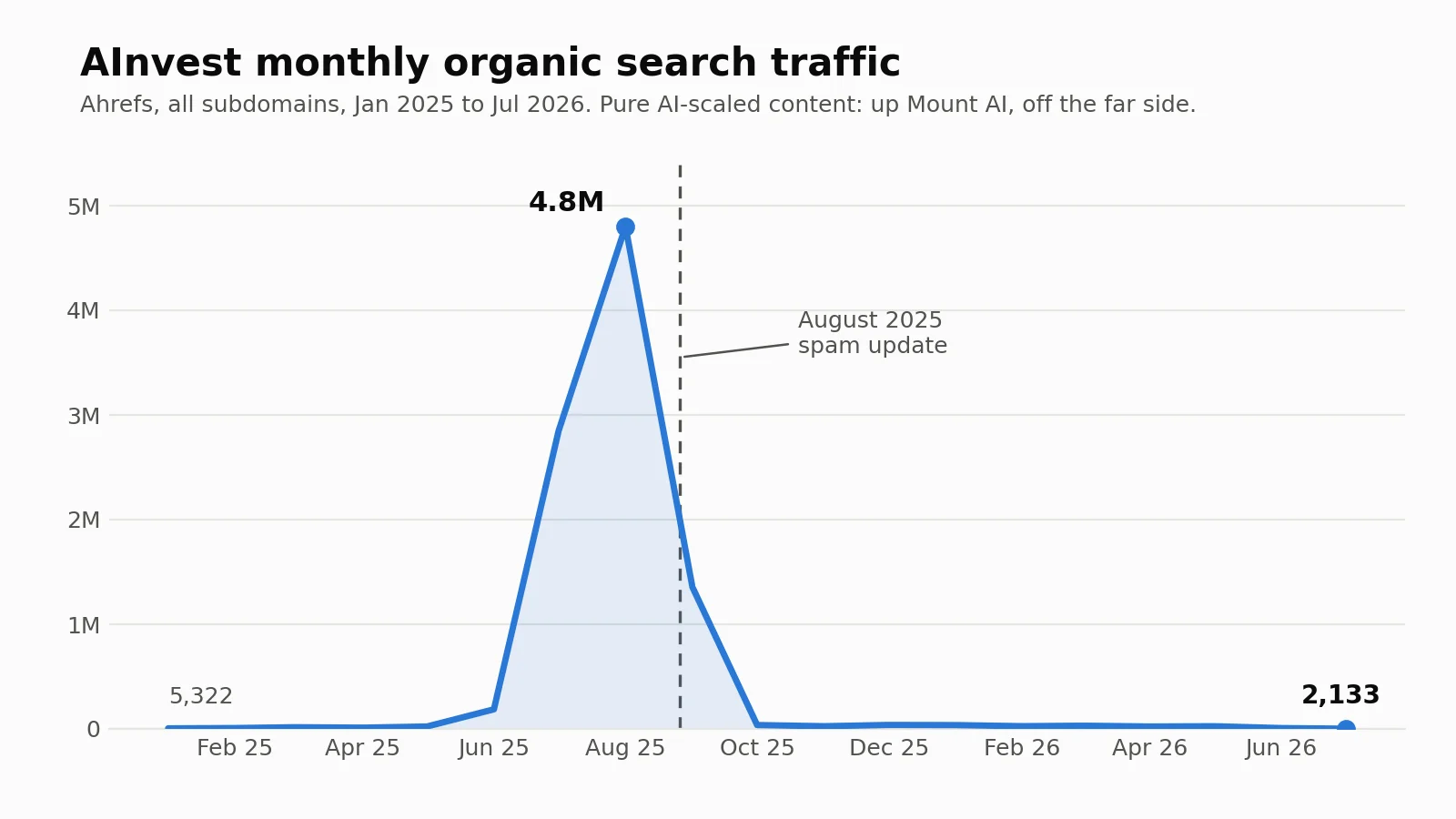
Edward Sturm documented the run-up on August 25 and wrote that everybody, himself included, believed the site would eventually get hit. He even argued the content was real AI journalism rather than slop. Google's August 2025 spam update landed within days and did not honor the distinction. September traffic: 1.36 million. October: 37,000. This week, ainvest.com sat at about 2,100 visits. From 4.8 million to two thousand in under a year, a 99.96% decline, most of it inside sixty days. Big mistake. Big. Huge.
Semrush now has a name for the chart shape: Mount AI. A sharp climb, a beautiful peak, a cliff. Many of the sites that summit never see it coming, because the climb feels like proof it is working.
AInvest is not an outlier. The SEO heist that scaled Causal.app on thousands of AI articles watched traffic fall from 610,000 to 190,000 monthly visits once Google reacted. When Originality.ai audited the deindexed sites from the March 2024 manual action wave, every single one had AI-generated posts, and half were 90 to 100% AI. The reckoning used to take a year. AInvest got about ninety days at altitude.
The punishment does not even need the fingerprint research. NavBoost measures whether real people are satisfied with what they clicked, over rolling thirteen-month windows. Slop earns a click on the headline and never earns the second one. Users do not come back, and mostly do not even finish the page. Structural detection just lets Google stop waiting thirteen months for the user data to confirm what the document said on arrival.
Why AI Slop Survives on Social Media and Dies in Search
If the fingerprint is real, why is your Facebook feed still full of AI clips of guys hand-building log mansions and dogs pulling toddlers out of rivers?
Because the platforms are paid differently. Social media monetizes attention, and AI slop generates cheap attention at industrial volume: engagement-bait images made in seconds, faceless YouTube channels posting slop videos by the hundred, feeds full of people arguing with pictures of things that never happened. Users often cannot tell what is real at a glance, and the platforms are fine with that. The BBC has covered the backlash, and it changes little, because on social media even outrage is engagement and engagement is revenue. A media platform that profits when people stare has few reasons to stop the staring.
Search runs on the opposite economics. Google gets paid when results feel trustworthy enough that people come back and click ads again. Every slop page that ranks spends down that trust with real users. Social media platforms can afford an internet drowning in slop images and AI video. Google's core product cannot, which is why the detection research, the effort scores, and the new spam policies all point the same way. The slop will keep flooding your social feeds. Search rankings are another matter.
What the AI Slop Fingerprint Means for Your Content
"Just write like a human" is advice about as helpful as Google's vague "write better content," the kind of tip that sounds right, costs nothing to say, and leaves you staring at a blank page with no idea what to actually change on Monday morning.
AI-assisted content and AI slop are different species, and the fingerprint research finally explains why one ranks and one dies. Using a model to tighten a draft a person actually wrote does not change your structure. You chose the angle, the evidence, the order, the opinions. Telling a model to create forty articles from forty keywords produces forty documents with the same skeleton, the same over-explained themes, the same tidy endings, parked in the same corner of the map as every other machine-made document online. That corner is where content pipelines go to die.
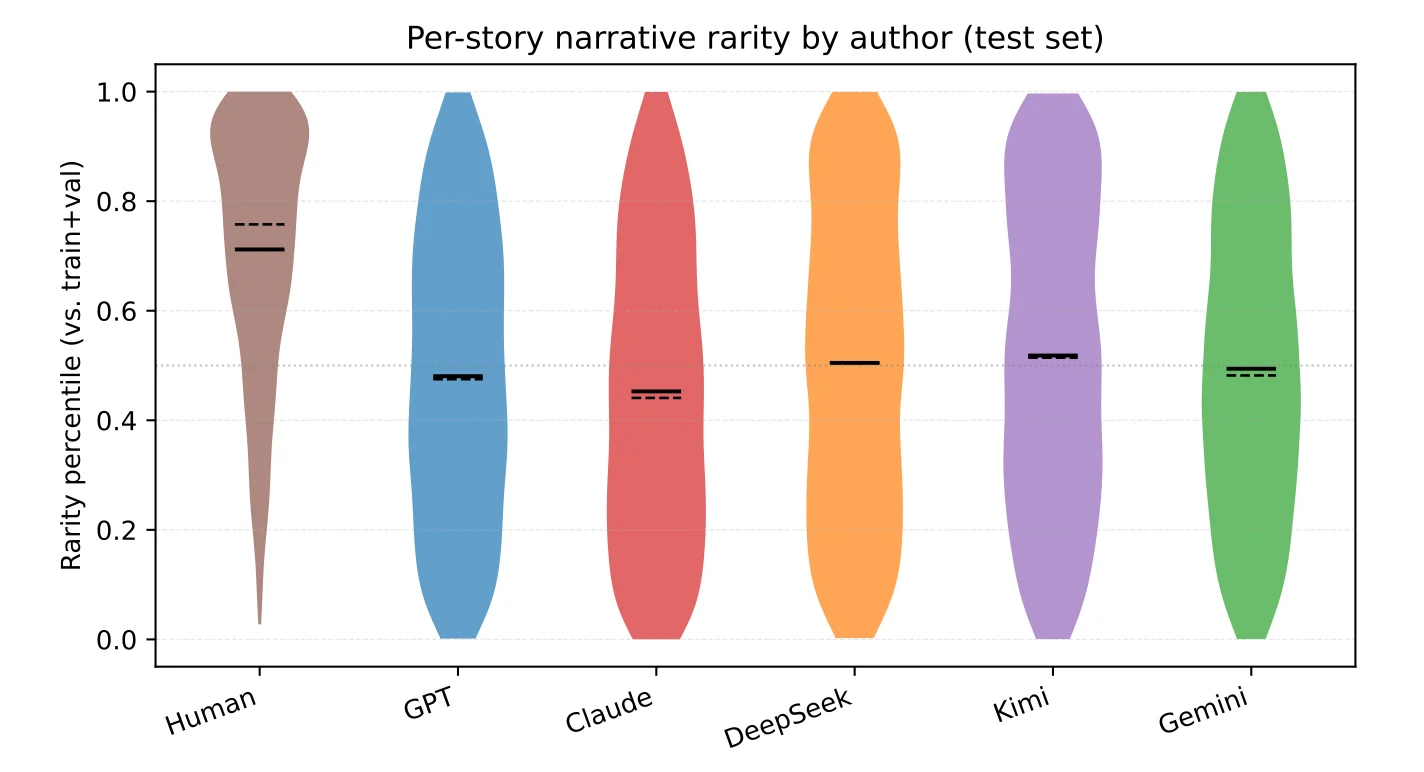
So steal the paper's feature list and invert it into a brief. Take a position a competitor could disagree with. Bring numbers you personally pulled, like a traffic history nobody else bothered to check. Break the template when the material demands it. Leave a loose end. Talk to the reader the way I have been talking to you. These are the exact features the classifier uses to decide a person wrote the thing, and they are also the features that make anything worth reading. You may notice this article refuses the tidy structure the models favor. That is not an accident.
None of it works on a site that is already structurally hollow, though. Trust compounds slowly and collapses fast. This is also why your agency's monthly blog posts might be hurting the site: volume with no point of view feeds the fingerprint. The question was never whether Google penalizes AI content. It is whether your content pipeline can say one thing your competitors cannot. If it cannot, that is not a volume problem.
Somewhere a Model Is Already Reading Your Site
Every gold rush in SEO ends with the same geology lesson. Doorway pages met Panda. Paid links met Penguin. The people running AI slop cannons believe they are running silent, and five researchers with a public GitHub repo just proved every boat in the fleet has a signature.
Nobody outside Mountain View can tell you whether Google is listening for it yet. AInvest's chart looked like proof of concept right up until it became a case study. Your next quarter of content is already planned. Which chart is it drawing?
Michael McDougald
Founder of Right Thing SEO, a math-driven SEO agency based in Nashville and Sarasota. Michael has spent 15+ years helping businesses achieve sustainable organic growth through data-driven strategies.
Learn more about Michael →