How to Build High-Quality Backlinks That Pass PageRank
Here's what Google's algorithm actually reads when it finds a link, and how I build the ones that count.
Backlinks are still one of the strongest signals Google has, but most of them do very little. Google crawls a link, scores it, and moves on. The ones that actually move rankings share a small set of traits, and once you understand what Google reads when it finds a link, building the right ones becomes a lot more predictable.
I'm writing this for the situation where you have the most control, which is when you're placing the link yourself. That might be a guest post you're writing, a placement you're pitching, a partner feature, or your own website. When you control the page doing the linking, the useful question isn't whether the site is good enough to ask. It's how to place the link so it actually passes equity, and that's what most of this guide is about.
The short answer
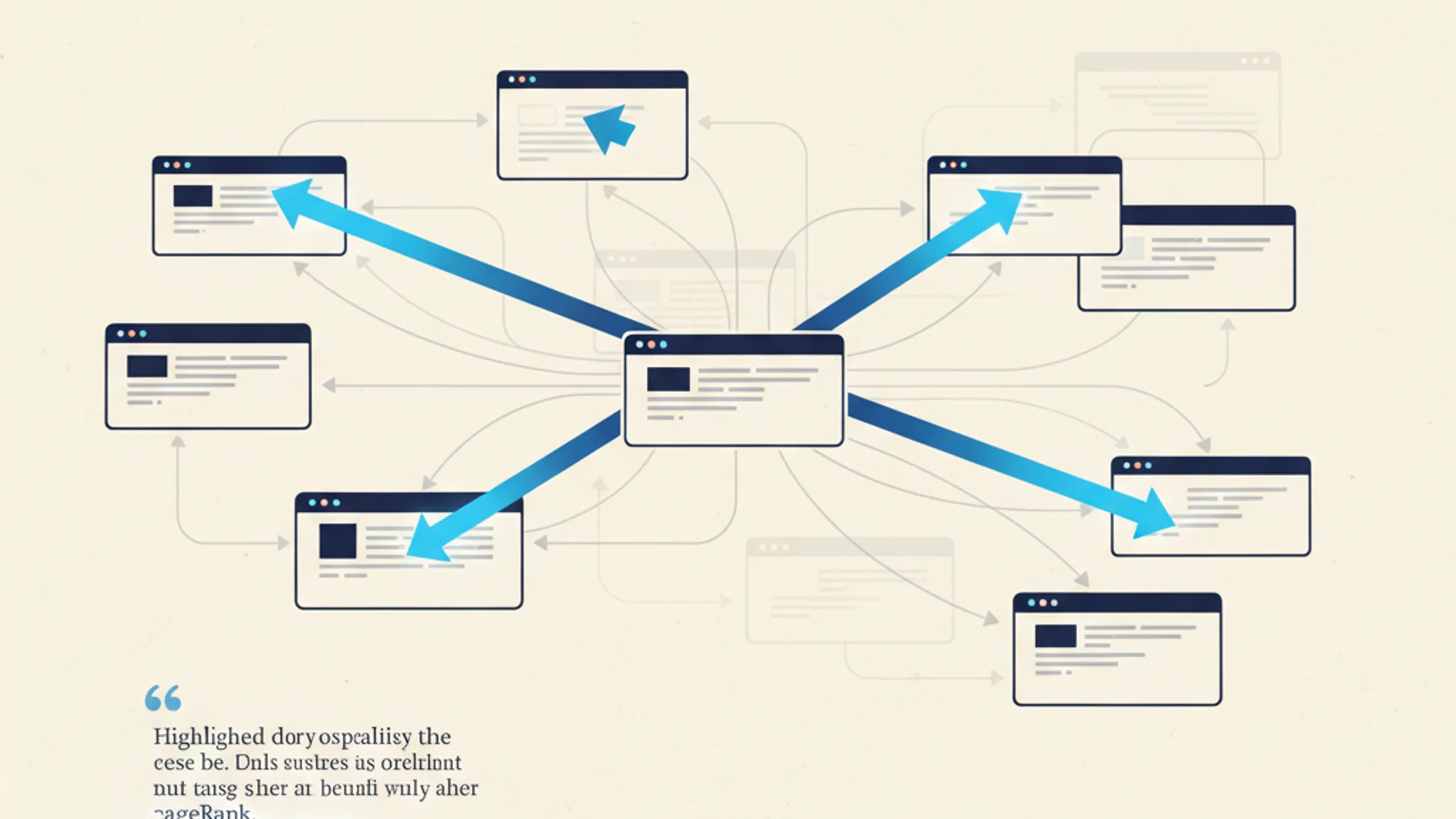
To build backlinks that pass PageRank, earn dofollow links placed editorially inside relevant, indexed body content, wrap them in a sentence that explains the link the way a journalist would cite a source, and use branded or descriptive anchor text instead of exact-match keywords. Relevance and editorial placement decide how much of the link's equity actually reaches your page.
That's the short version. Below I'll get into what makes a backlink worth chasing, which links pass PageRank and which get ignored, what the leaked Google documentation shows, two clean ways to place a link in a guest post, and whether any of this still matters in 2026.
The ChecklistWhat Makes a Backlink High Quality?
A high-quality backlink is a dofollow link from a relevant, authoritative, indexed page that puts your backlink inside its main editorial content with natural anchor text. You earn high-quality backlinks with content worth citing, not by buying them in bulk, and one quality backlink from a trusted domain beats a hundred low-quality ones.
When I size up a link, here are the five quality signals I'm checking:
- Authority. The linking page and its domain have real PageRank of their own. A backlink from a high-authority domain passes more equity than one from a weak website. Domain authority and domain rating are third-party attempts to approximate this.
- Relevance. The linking website, page, and surrounding paragraph are about something close to your topic. Relevance is the multiplier on every other quality signal.
- Anchor text. The clickable words, and the body text around them, describe where the link goes without looking forced.
- Placement. The backlink sits in the body content, not the footer, sidebar, or an author bio nobody reads.
- Destination. The link points somewhere that deserves it, usually a linkable asset that then feeds equity to your money pages through internal links.
Those five signals are how you judge a link you're trying to earn. When you're the one placing the link, you also control how it's worded and where it sits on the page, which is where most of the real leverage lives. The rest of this section is about using that control well.
The GatesWhich Backlinks Pass PageRank, and Which Get Ignored?
In theory, any crawlable backlink from a page in Google's index can pass PageRank, even one that looks junky to a human. In practice, how much authority actually moves through that backlink depends on a handful of gates. Each one has to be cleared for the link to count, and missing any of them causes Google to discount it.
Here's what a backlink needs to pass real equity:
- Dofollow. A
rel="nofollow"attribute tells Google not to cast the vote. Since 2020 nofollow is a hint rather than a hard rule, so some nofollow links may pass equity, but I never count on it. Build for dofollow and treat nofollow as a bonus that still drives traffic and brand mentions. - Indexed. If the linking page isn't in Google's search index, the backlink can't help you. Check with a
site:search on the exact URL before you value any placement. - Editorially placed. Backlinks inside body content carry more weight than links in templated areas repeated across every page of the website.
- Relevant. The closer the linking page and its surrounding content are to your topic, the more of the backlink's equity survives the trip.
- Not from a paid-looking site. A domain with no topical focus, or one covered in exact-match outbound anchors, can be discounted wholesale. If the site reads as a link farm, even a perfect link on it passes nothing.
The equity itself is finite and shared. A page splits its outgoing authority across every link it contains, so a link on a page with five outbound links is worth far more than the same link buried among two hundred. A page stuffed with keyword-rich outbound links is a bad place to be linked from, even if its authority score looks high.
Relevance and authority are the multipliers
Two backlinks can clear all the gates above and still be worth wildly different amounts. The difference comes down to relevance and authority.
Authority is how much PageRank the linking page has to give. Relevance is how much of it survives the trip to a page about your topic. A high-authority backlink from an unrelated page leaks most of its equity, while a mid-authority link from a tightly relevant page can pass nearly all of its quality. When I weigh a placement, I weight relevance and authority over any single domain score.
Anchor text: link like a journalist
The most useful way to think about anchor text is to borrow from journalism. When a reporter cites a source, they name it and link to it. The anchor is descriptive or branded, the sentence around it explains what's being referenced, and it reads naturally because it was written to inform the reader. That same structure is what lets a link pass equity cleanly, and it's worth understanding why. Google doesn't only read the anchor. It reads the words on either side of it to work out what the link is about, so the sentence you build around the link is doing as much work as the anchor itself.
Example: on the page
Covered pools cost about 40% less to reopen in spring, according to a 2026 survey by Happy Pools.
<p>Covered pools cost about 40% less to reopen in spring, according to a 2026 survey by
<a href="/pool-reopening-survey">Happy Pools</a>.</p>
Why it passes: the anchor is just the brand name, so it can never be flagged as over-optimized; the surrounding sentence carries the keywords and the claim, which is the left and right context Google stores; placed in body copy; topically on-point.
When you've got editorial control over a backlink, default to two anchor text types: your brand or publication name, or a descriptive citation phrase. Here's how I decide.
| Anchor type | Example | When to use it | Watch out |
|---|---|---|---|
| Branded | Happy Pools | Freely. Your safest default and the one that builds entity signals. | Nothing. This never trips a spam filter. |
| Descriptive / citation | according to their 2026 referral study | Freely. Ideal for citing data, quotes, and sources. | Keep it reading like a sentence, not a keyword. |
| Partial-match | this guide to pool maintenance | Occasionally, when it genuinely fits the sentence. | Don't let it dominate the profile. |
| Exact-match | best pool builder Nashville | Internal links, or rarely on a highly relevant external page. | A high proportion or fast velocity reads as manipulation. |
A single exact-match anchor on a relevant page is fine. The problem is repetition. A backlink profile dominated by the same keyword-rich anchors looks engineered rather than earned, and Google measures that pattern directly.
The page-level trap: keyword-stuffed outbound links
There's a related problem at the page level. When a single page carries a lot of keyword-heavy outbound links pointing at different sites, it starts to look like it exists to sell backlinks rather than to inform readers.
Google can discount the whole page as a link source, which means your backlink gets dragged down by the company it keeps. When I'm vetting a placement, I look at the other pages on the site and the rest of the outbound links on that page. If it reads like a directory of exact-match anchor text, I walk away even if my own placement looks like a quality backlink. A few bad neighbors can turn an otherwise high-quality page into a low-quality link source.
The domain-level filter: links that don't look paid
Everything above decides how much equity a link passes to you. Before any of that, though, Google makes a more basic judgment about whether the linking site counts at all.
Google is trying to spot sites that exist to pass links rather than to serve readers, and two patterns give them away. The first is obvious exact-match anchor text repeated across the site's outbound links. The second is the "everything site," a domain with no topical focus that runs a post on tips for hiring an HVAC contractor next to one on holistic health next to crypto. That topical incoherence is a link-farm fingerprint. In the leaked terms, it shows up as a low siteFocusScore, a large siteRadius, and a low sourceType tier.
These demotions happen at two levels, and the distinction matters. Relevance and anchor text work at the link level, deciding how much PageRank reaches your page. Classification happens at the domain level. If Google judges the whole site to be a link farm or a paid-link network, every link on it is effectively worthless, no matter how relevant, branded, or editorially placed your individual link is. A perfect link on a farm passes nothing, because the domain it sits on has already been written off.
Straight talk: paid links and ethics
There's no morality to paid links or SEO tricks. Buying a link breaks Google's guidelines, but those guidelines are Google's preferences for its own index, not a matter of right and wrong. Their spam policies say paid links that pass ranking credit are against the rules and should be tagged nofollow or sponsored. Plenty of agencies buy followed links anyway, mine included, because in the right niche it works.
What decides whether it works is whether the bought link still clears the gates above. A paid link that's relevant, editorial, and on a real site usually can't be told apart from one you earned, so it passes equity like any other. A paid exact-match anchor on a low-quality everything-site passes nothing, because that link was never going to carry equity in the first place. Buying at scale also leaves a footprint, and when a link spam update catches it, Google has said the gains disappear and don't come back. The only links worth paying for are the ones that would have looked great for free.
Where ethics actually comes in is harm and disclosure, and we treat it the way a good doctor does. A doctor avoids any action that could hurt the patient, and discloses anything experimental the way a clinical trial spells out its risks before you agree to it. We hold a site to the same standard. We avoid tactics that could cause problems down the road, and when something is experimental or pushes against the guidelines, we lay out the risk and the reward and let the client decide. That, not a line in Google's rulebook, is what doing the right thing means here.
The EvidenceHow Google Reads a Link: What the Leaked Documentation Shows
None of this is guesswork. When Google's Content Warehouse documentation leaked in 2024, it exposed thousands of internal attributes, and Mike King's breakdown at iPullRank remains the most thorough analysis of them. A handful of those fields speak directly to how links are stored and scored:
| Leaked field | What Google stores | What it means for your link |
|---|---|---|
| fullLeftContext fullRightContext | The words on each side of the link. | Write a sentence that explains the link. The text around the anchor is read alongside it. |
| context2 | A hash of the terms near the anchor, roughly paragraph level. | Keep the whole paragraph on-topic, not just the anchor. |
| anchorMismatchDemotion | A demotion when the anchor and topic don't match the destination. | Off-topic links get actively dragged down, not merely ignored. |
| phraseAnchorSpamFraq phraseAnchorSpamDays | The fraction of spammy anchors pointing at a page, and how fast they appear. | It's the ratio and the velocity that flag you, not one link. |
| sourceType | The linking page's quality tier: high, medium, or low. | A strong source page counts for more before relevance is even applied. |
| pageEmbedding siteRadius | Topic vectors, and how far a page drifts from its site's core topic. | Relevance is measured as distance in vector space. Stay close to the topic. |
From the leak
Taken together, these fields describe the same thing the journalism comparison points at. Google reads the anchor, reads the words around it, measures how topically close the linking page is to yours, weighs the source page's quality tier, and watches your overall anchor mix for unnatural patterns. A link written the way a good editor would write it satisfies all of those checks without any special effort.
The ExamplesA Great Guest Post vs. What Not to Do
Here's the same opportunity handled two ways.
Do: the great guest post
You write a genuinely useful article for a respected pool-industry website about preventing winter damage to fiberglass pools, and you cite your own data. You've got two clean ways to place the link, and both pass:
Option A: put the anchor on the brand
In a survey of 200 Tennessee pool owners, Happy Pools found that covered pools cost 40% less to reopen in spring.
Option B: put the anchor on the fact, keep keywords in the context
Happy Pools, a Nashville pool builder, surveyed 200 Tennessee pool owners and found that covered pools cost 40% less to reopen in spring.
Option B wraps the link around a factual claim instead of the brand name. The keywords and context, "Nashville pool builder" and "Tennessee pool owners," sit around the link, so Google picks them up through the left and right context it stores, and you never use an exact-match keyword as the anchor. It's the descriptive-anchor alternative to a purely branded link, and it's just as safe.
✓ dofollow & indexed ✓ topically relevant page and paragraph ✓ editorial placement in body content ✓ branded or descriptive anchor, real citation context ✓ a handful of clean outbound links
Either option clears every gate and survives an anchor-mismatch check, a context check, and a source-quality check without effort.
Don't: the link you wasted money on
You buy a slot on a general "business tips" blog that publishes ten guest posts a week. The article is loosely about marketing, but you slip in an exact-match link in a sentence that has nothing to do with pools:
There are many ways to grow a company, and you should always hire the best pool builder Nashville has to offer.
✗ anchor mismatches the surrounding topic ✗ irrelevant context terms around the link ✗ 15 other exact-match outbound links on the page ✗ 40 placements in three weeks (velocity spike)
Best case, Google ignores the link and you wasted the money. Worst case, the pattern across your profile trips a penalty.
Both versions point to the same page. Rewriting the sentence so the link reads as a citation is usually all it takes:
Don't: keyword jammed in
Looking for the best pool builder Nashville? Get a quote today.
Do: same link, rewritten as a citation
When a Nashville homeowner asked about winter reopening costs, the team at Happy Pools ran the numbers across 200 local pools.
It takes the same effort either way. The difference is just whether the sentence was written for a reader or built around a keyword.
2026Do Backlinks Still Pass PageRank?
Yes. Google has confirmed PageRank has evolved but is still part of its core ranking systems, and the leak is full of PageRank variants. Backlinks are still one of the few scalable, objective signals search has, and everything else rides on top of that link graph.
What's changed is the context around them. Brand mentions matter more now for showing up in AI Overviews and generative answers, spammy links usually get ignored instead of punished, and the bar for what counts as a quality backlink keeps rising. None of that kills PageRank. It still rewards the same thing it always has, a link a real person placed because your page was worth mentioning.
The playbook hasn't really changed in fifteen years. Earn fewer, better, more relevant backlinks from indexed pages on real sites, place them in editorial content, write the anchor text and the surrounding sentence for a human, and grow at a steady pace rather than in spikes. Sites that work this way tend to rank, and the ones chasing volume across low-quality pages tend not to.
If you want help auditing your current backlink profile, fixing the anchor text on links you already have, or building an SEO link strategy that earns backlinks your pages can actually rank on, that's the kind of work we do every day at Right Thing SEO. We run this SEO play for everything from local service sites to content-heavy websites, and the pages that climb in search are always the ones earning links from relevant sites, not the ones with the most links. The goal isn't the most links. It's links Google actually counts.
FAQFrequently Asked Questions
What makes a backlink high quality?
A high-quality backlink comes from a relevant, authoritative domain, sits inside the editorial content of an indexed page, uses natural anchor text, and is a dofollow link. The more topically relevant the linking website and surrounding content, the more quality the backlink carries.
Do all backlinks pass PageRank?
No. A link only passes meaningful equity if the page is indexed, the link is dofollow, and the placement and context are relevant. Nofollow links, links on non-indexed pages, and off-topic links are discounted or ignored.
How many high-quality backlinks do I need?
There's no fixed number. A handful of relevant links from authoritative, indexed pages will usually outperform hundreds of low-quality ones. For an important page, twenty to thirty strong links make a real difference.
Does exact-match anchor text hurt my rankings?
A single exact-match anchor on a relevant page is fine. The risk comes from proportion and speed. A profile dominated by exact-match anchors, or a sudden spike of them, is what looks manipulative. Lead with branded and descriptive anchors.
Are nofollow links worthless?
No. Since 2020 Google treats nofollow as a hint, so some may pass equity, and they still drive referral traffic, build brand mentions, and keep your link profile looking natural.
Does PageRank still exist?
Yes. The public score disappeared in 2016, but Google has confirmed PageRank remains part of its core ranking systems, and it continues to evolve.
Michael McDougald
Founder of Right Thing SEO, a math-driven SEO agency based in Nashville and Sarasota. Michael has spent 15+ years helping businesses achieve sustainable organic growth through data-driven strategies.
Learn more about Michael →