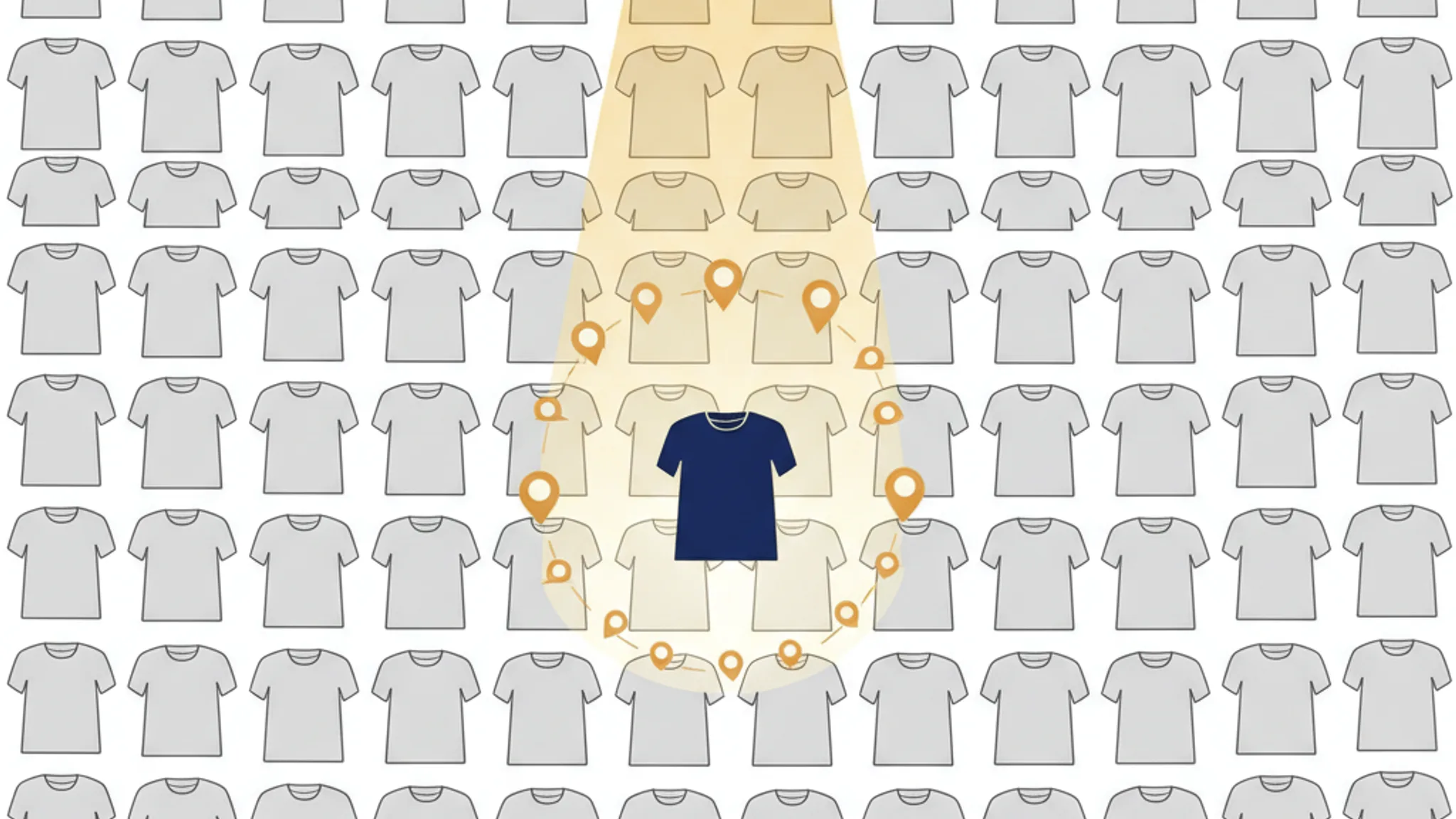
Screen Printing SEO in a Market Flooded by Aggregators
You run a real shop. You pull tighter prints than the national sites, you hit deadlines a warehouse three states away never could, and you still watch CustomInk and Printful sit at the top of every search your customers type. That is the screen printing SEO problem in one sentence. The companies with the biggest ad budgets and the oldest domains own the obvious keywords, and the local shop doing better work is buried on page two.

I build content strategy for service businesses, and screen printers get one thing wrong that quietly costs them orders. They try to beat the aggregators at the aggregators' own game. You will not win that game, and you do not need to. You win the searches the national sites cannot serve, and there are far more of those than most shop owners think.
You will not win that game, and you do not need to.
What screen printing SEO actually is
Screen printing SEO is the work of optimizing a local print shop to rank for the searches that become orders: screen printing near me, custom t-shirts, team uniforms, and the city-and-service queries national aggregators cannot answer. Screen printing SEO lives in the Google Map Pack and on specialty service pages, anchored by a complete Google Business Profile and a steady flow of reviews. It is measured in quote requests, not traffic.
That definition matters because it changes who you are fighting. The custom apparel market is large and still growing, $7 billion market projected to double by 2035. Money that size pulls in well-funded online-only operators built to win national head terms. Your screen printing SEO is not a smaller version of theirs. It is a different strategy pointed at a different buyer.
Why aggregators own the top of the funnel
CustomInk, Printful, and the print-on-demand marketplaces win searches like "custom t-shirts" and "design your own shirt" because they have spent years and millions earning the backlinks and domain authority those terms require. Printify and Etsy sellers pile on with thousands of templated product pages that no single shop can match for sheer volume. You are not going to outrank a company doing nine figures in revenue on the most competitive keyword in the category, and you do not need that keyword anyway.
Here is what shop owners miss. That head-term traffic is mostly one-off consumer orders of a dozen shirts, the lowest-margin work in the building. The orders that pay your lease come from local buyers: the high school booster club ordering 400 spirit-wear hoodies, the brewery that needs staff uniforms every quarter, the union shop that reorders the same job four times a year, the charity 5K with a three-week deadline. Those customers search differently, they want to talk to a person, and they expect a sample before a 500-piece run. The aggregators are structurally bad at being found for that kind of search and worse at serving it. That gap is your whole opening, and your screen printing SEO should be built to widen it.
The local Map Pack is the part of search aggregators cannot buy
Nearly half of all Google searches now carry local intent, and a local search behaves nothing like a national one. When someone types "screen printing near me" or "custom hoodies Nashville," Google answers with the Map Pack, the block of three local listings above the regular results. That box is the single most valuable piece of real estate in screen printing SEO, and a national warehouse cannot rank in it.
The reason is in how Google builds local results. Google ranks the Map Pack on relevance, distance, and prominence: how well your profile matches the search, how close you are to the searcher, and how well-known your business is. Distance is the factor that quietly does your competing for you. An online-only operator with no storefront near the customer cannot win on proximity, so it falls out of the local pack no matter how strong its domain is. The shop down the road wins by default, if that shop has done the work.
Reviews and your Google Business Profile are the unfair advantage
Most of that work is your Google Business Profile, and it is where small shops beat both the aggregators and the lazy incumbent across town. Pick the right primary and secondary categories for screen printing, write a real description, list the services you offer, set your hours, and upload photos of actual finished jobs to your website and profile every week. A complete, active profile signals relevance and prominence at the same time.
Reviews are the lever that moves prominence hardest, and the data is not subtle. BrightLocal's Local Consumer Review Survey found that 75 percent of consumers always or regularly read reviews for local businesses, and 88 percent would use a business that replies to all of its reviews versus 47 percent for one that ignores them. A screen printing shop with 200 recent five-star reviews and a weekly habit of posting finished-job photos will out-rank a twenty-five-year incumbent sitting on twenty-five reviews, and it will not even be close. Ask for the review by text the day after pickup, every single order, and respond to all of them.
Build pages for the work an aggregator template cannot describe
The other half of screen printing SEO is content the national sites will never write, because their templates cannot say it. When I audit a print shop's website, the failure is almost always the same: one homepage trying to be everything, ranking for nothing. The shops that win build a dedicated page for each of the services they actually offer.
That means separate, specific pages for discharge printing, water-based ink, plastisol transfers, foil, puff, DTG, and embroidery, plus the buyer-specific work: team uniforms, league jerseys, corporate apparel, Greek life, and event shirts with a rush turnaround. Each page targets the keywords a buyer actually uses, with low competition, and together they build the topical depth a generic "custom apparel" page never reaches. This is where your actual expertise becomes a ranking asset. An aggregator's template cannot explain why water-based ink feels different on a vintage tee or how you hold a Pantone match across a reorder, but your specialty pages can, and that is exactly the language a serious buyer searches with. A blog that answers the questions customers actually ask, like how to care for printed garments or which ink survives industrial laundering, pulls in research-stage traffic and builds the organic visibility that feeds those service pages.
None of it works without internal links carrying authority from your blog to the pages that take orders, the same discipline that lets product and category page linking. Map the links once so every new post pushes ranking strength toward a service page, and the library compounds the way a SaaS content engine turns readers into signups.
Measure quote requests, not traffic
Local SEO is the slowest channel to start and the cheapest once it matures. Expect Map Pack movement in 60 to 90 days and steady lead flow somewhere around month twelve, then a cost per lead that keeps dropping while the rankings, reviews, and pages stack up. Track the number that actually pays you. For a screen printer that means quote requests, booked jobs, and recurring uniform programs, while raw session counts stay a vanity metric.
This matters more every quarter as AI Overviews and answer engines start summarizing "best screen printing near me" before anyone clicks a thing. The shops those systems name are the ones with the entity signals search already rewards: a complete profile, a wall of recent reviews, and pages that clearly state what they print. The aggregators flood the market, but they cannot flood your zip code. Build the local search presence they cannot copy, and that corner of the market is yours. If you want a partner to build it with you, that is the work we do on our screen printing SEO and local SEO engagements.
By Katrina Kendall
Katrina Kendall
Content Strategist at Right Thing SEO, where she helps business owners sound like the experts they already are. Her focus is on translating real-world experience — the kind that lives in a founder's head but never makes it onto the page — into content that satisfies Google's E-E-A-T standards and actually converts. Before joining Right Thing, she spent six years in B2B content strategy, where she got tired of watching brilliant operators get outranked by generic blogs written by people who'd never done the work.