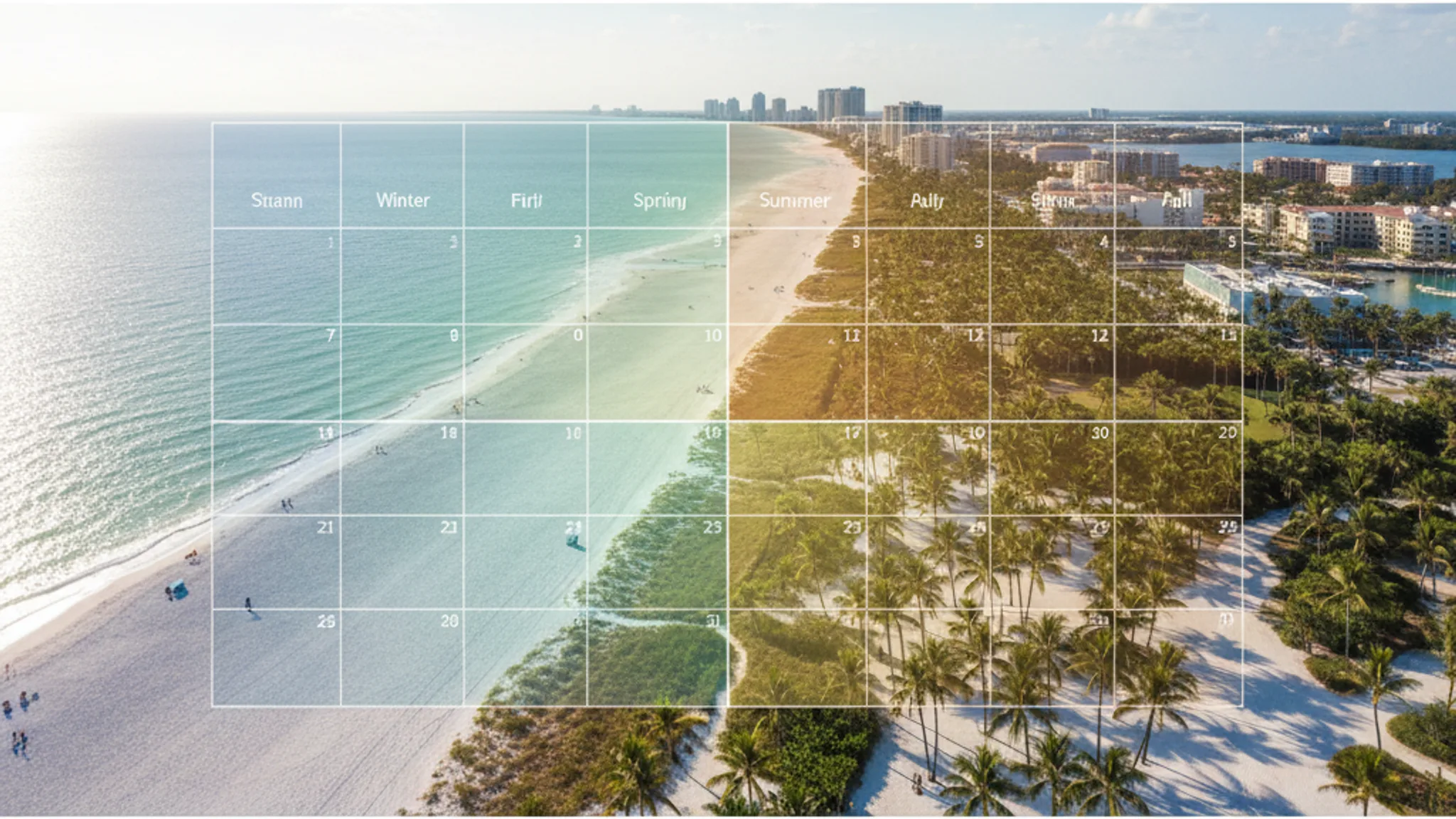
The Seasonal SEO Calendar Every Sarasota Business Needs to Stay Booked Year-Round
Sarasota's business calendar moves in waves. Your restaurant is slammed in January and dead in August. Your rental property sits empty for months, then books solid. Your medical practice sees crushing demand when snowbirds arrive, then quiet periods in summer. Most business owners accept this as inevitable. They budget for it, staff for it, and call it "seasonal."
But your competitors are doing something different. They're mapping demand months in advance and positioning their websites to capture it before peak season hits. They're using seasonal SEO to turn a feast-or-famine pattern into predictable revenue.
A seasonal SEO calendar lets you capture that demand before it arrives, not after. When potential customers start searching for "beach vacation rentals in Sarasota" in September, they find your property. When they search for "best restaurants near Lido Beach" in December, they find your restaurant. Because you planned ahead.
What seasonal SEO means for a Sarasota business
Seasonal SEO is the practice of optimizing your website, content, and local SEO presence around predictable patterns in search demand. For a Sarasota business, this means understanding that your customers search for you at specific times of year, and you need your digital presence ready to capture that demand when it peaks.
There are two types of seasonal patterns working against you. Time-based patterns are obvious: snowbird season, spring break, summer vacations, holiday retail. Event-based patterns are less obvious but equally important: hurricane season, college graduation, spring training season. Google's algorithm recognizes these recurring cycles. When the search engine launched its Freshness Algorithm update, it affected 35% of all search queries, prioritizing recent content for time-sensitive topics. This means Google is actively looking for fresh, seasonally relevant content. If you're not publishing it, a competitor will.
The algorithm calls this QDF, or "Query Deserves Freshness." Google's system identifies regularly recurring events and automatically surfaces the most current, relevant content. Your beach vacation rental needs updated availability and reviews before snowbird season. Your restaurant needs fresh photos and current specials before holiday parties. Your real estate business needs updated market insights before spring buying season. When you ignore these windows, Google assumes your site isn't maintaining current information about seasonal demand.
For Sarasota specifically, your seasonal SEO calendar has distinct peaks: snowbird season (January-March), spring break and shoulder season (April-May), summer tourism and family travel (June-August), recovery and planning season (September-October), and holiday retail plus early snowbird return (November-December). Each peak requires different keywords, different content, different landing pages.
A 12-month seasonal SEO calendar for Sarasota
Don't think of this in strict months. Think of it in seasonal blocks where demand surges, dips, and shifts.
January through March: Snowbird peak
This is your money season. Search volume for "things to do in Sarasota," "vacation rentals in Sarasota," "best restaurants near Siesta Key," and "Sarasota real estate" peaks hard. Your vacation rental gets inquiries. Your restaurant has a wait list. Your medical practice is booked out. Your real estate office can barely keep up.
By the time January arrives, you're too late to build ranking authority. Your seasonal SEO strategy should have started in September. That's when you update landing pages for snowbird-targeted services, refresh Google Business Profile photos and hours, and publish content about winter activities. Your content calendar for December should focus on "what to do in Sarasota in January," "best time to visit Sarasota," and "where to stay in Sarasota." These pieces build visibility months before the search peaks.
Your Google Business Profile needs attention here. Update your hours if they change seasonally. Add seasonal photos: beach shots, restaurants full of happy diners, warm sunshine. Post seasonal updates about holiday specials or winter activities. The optimization that actually generates leads from your profile changes with your seasonal demand. This fresh content signals to Google that your business is actively engaged and current, driving more traffic from local search.
April through May: Shoulder season transition
Tourism doesn't evaporate, but it shifts. As we covered in our analysis of Sarasota's tourism SEO patterns, seasonal demand requires year-round work. Real estate searches climb as buyers make spring relocation decisions. Outdoor activity businesses see an uptick: kayaking, fishing, paddle boarding. Families with school schedules start planning early summer trips.
Your content strategy shifts with it. The "snowbird" angle fades. Real estate businesses pivot to "move to Sarasota" and "why families choose Sarasota." Activity businesses emphasize summer planning and family-friendly experiences. This is a transition period where your seasonal keywords change and your landing pages need subtle repositioning. A single seasonal SEO strategy that works for February won't work for May.
Create dedicated landing pages for this shift. You're not replacing winter content; you're layering in spring and early summer angles. Google Trends will show you exactly when this shift happens in your market.
June through August: Summer and hurricane season
Tourism dips, but not all of it disappears. Families travel, international visitors still come, and locals stay. August brings something different: hurricane season searches spike. When people search for "hurricane preparedness," "storm shutters," "flood insurance," your business needs to be visible if those services matter to you.
Use this off-peak period strategically. Your vacation rental doesn't get booked as much, so invest that time building content for fall and winter. Your restaurant has slower evenings, so publish blog posts about fall events and winter holiday parties. Your real estate business publishes buyer's guides for the fall market. Your landscaping business creates hurricane prep content. You're not pushing seasonal demand in summer; you're building the visibility you'll need when demand returns.
September through October: Recovery and planning season
This is your strategy season, not your vacation. Snowbirds are starting to think about returning. Businesses are planning for holiday retail and year-end events. Search volume for "hurricane prep" stays high in September then drops. "Holiday party venues in Sarasota" starts climbing in October.
This is when you audit your entire seasonal SEO approach. Did your January through March strategy work? What keywords drove traffic? What landing pages converted? Which content pieces are still getting visits? Your off-season gives you the space to analyze and improve without the pressure of peak demand.
Start your content calendar for November and December. You need November blog posts and landing page updates in place by September. Plan your holiday retail strategy, your snowbird return messaging, and your year-end promotional content. By October, your seasonal keywords should be researched and your content framework built.
November through December: Holiday retail and snowbird return
This isn't just one season; it's two overlapping demand cycles. Holiday retail peaks. Early snowbird inquiries arrive. Search volume for "holiday shopping Sarasota," "holiday events," "restaurant reservations for Christmas," and "winter vacation rentals" all spike simultaneously.
Your seasonal SEO calendar should have these pieces ready by November 1st. Holiday content published in November performs better than holiday content published in December. Early snowbird inquiries arrive in November; your content needs to be there before they search. Landing pages for holiday events, holiday shopping guides, and winter destination content should all be live and optimized.
Throughout the entire calendar, your seasonal SEO strategy should map to Google Trends data specific to Sarasota. Search interest for vacation rentals doesn't follow the same curve as search interest for real estate. Medical tourism peaks at a different time than golf tourism. Your seasonal calendar needs to reflect your specific business, not a generic "busy in winter" assumption.
How to build your seasonal SEO strategy before peak months
Start your keyword research three to four months before peak season hits. This isn't optional. If January is your peak, your seasonal keyword research should start in September. If spring buying season is your peak, your research should start in December. Waiting until November to plan your January strategy means you're already behind.
Start by identifying your seasonal peaks. Where does your search demand actually spike? Use Google Trends to see the data. Plot it. The shape of your demand curve tells you everything about your seasonal SEO timeline.
Next, segment your strategy into three phases: ramp-up, engage, and slow-down. The ramp-up phase is two to three months before peak. This is when you publish foundational content, refresh landing pages, and build topical authority. The engage phase is peak season itself. You're publishing fresh content frequently, updating Google Business Profile regularly, and monitoring performance. The slow-down phase is when demand declines. You're consolidating what worked, auditing performance, and planning the next cycle.
Your Google Business Profile is your most visible seasonal SEO asset. This is where your location, hours, photos, posts, and promotions live. Update it seasonally. Winter hours differ from summer hours. Summer photos differ from winter photos. Holiday promotions differ from off-season messaging. When you update your profile seasonally, Google sees fresh, current information and prioritizes your listing when local searches peak.
Create dedicated landing pages for each seasonal service. Don't expect one generic "vacation rentals" page to capture demand across all months. Build a page for "winter vacation rentals in Sarasota" targeting snowbird season. Build another page for "family-friendly beach rentals" targeting summer break season. Each seasonal landing page targets specific keywords, answers specific questions, and speaks to specific customer intent.
Build a content calendar tied directly to search volume data. We see this pattern repeatedly with our Sarasota clients: businesses that plan their content calendar based on actual search trends outperform those that publish randomly. Your calendar should show what content goes live when, what keywords it targets, and how it connects to your landing pages and Google Business Profile updates.
What to do in your off-season
Your off-season isn't vacation from SEO. It's your strategy season. This is when your competitors get lazy, and you get competitive advantage.
Use off-season time to build evergreen content that performs year-round. Seasonal content is urgent and timely, but evergreen content compounds value. A blog post about "Sarasota neighborhoods for retirees" gets seasonal traffic from snowbirds researching where to move, but it also gets regular traffic from younger professionals, families, and out-of-state buyers year-round. Build these pieces during your quiet months when you have bandwidth.
Your technical SEO doesn't stop in off-season. This is when you optimize site speed, implement schema markup, improve mobile responsiveness, and fix crawl errors. These improvements don't spike traffic overnight, but they compound value across your entire site. By the time peak season hits, your foundation is solid.
Audit and refresh last year's seasonal content for reuse. What blog posts did you publish last January? Are they still accurate? Do they need updates? A refreshed post about "winter activities in Sarasota" from last year might need current dates, new photos, updated information. Refreshing old content is faster than building new content, and Google sees the freshness update.
Plan two to three months ahead for your next peak season. Off-season planning becomes mid-season execution. If you spend September through October strategizing, you're ready to execute in November and December. You're not scrambling. You're not reactive. You're ahead of demand.
SEO is never done. You don't optimize your site in peak season then stop. You maintain, refresh, and continuously improve. A comprehensive local SEO approach in competitive markets means you're working year-round, just in different ways during different seasons. Peak season is about capturing current demand. Off-season is about building the foundation for next season.
Sarasota's seasonal SEO window is now
The businesses that win in Sarasota's seasonal market don't wing it. They build their seasonal SEO strategy before demand arrives, not after. They update their content calendar, Google Business Profile, and landing pages around predictable search patterns.
If your business moves in seasonal waves, your SEO should too. Start with your busiest month. Identify what searches drive demand. Work backward three months and build your strategy there.
Our Sarasota SEO agency works with local businesses that live on seasonal demand patterns. Businesses that plan ahead capture more demand than businesses that scramble. Your seasonal SEO calendar is your competitive advantage.
Katrina Kendall
Content Strategist at Right Thing SEO, where she helps business owners sound like the experts they already are. Her focus is on translating real-world experience — the kind that lives in a founder's head but never makes it onto the page — into content that satisfies Google's E-E-A-T standards and actually converts. Before joining Right Thing, she spent six years in B2B content strategy, where she got tired of watching brilliant operators get outranked by generic blogs written by people who'd never done the work.