What On-Page Optimization Actually Looks Like When You Do It Right
Most of the on-page optimization advice floating around the internet reads like it was written for someone building their first website in 2014. Add your keyword to the title tag. Write a meta description. Use header tags. Check a few boxes, move on.
I've audited hundreds of sites where someone followed that checklist and still couldn't break page two. The problem isn't that the advice is wrong. The problem is that it's incomplete, and the people giving it don't understand why those elements matter to the algorithm in the first place.
On-page optimization isn't a checklist. It's a system of signals that tells Google what your page is about, how confident it should be in that assessment, and whether your content deserves to rank above the other pages making the same claim. When you understand the mechanics behind these signals, the tactical advice stops being a guessing game.
What on-page optimization actually is
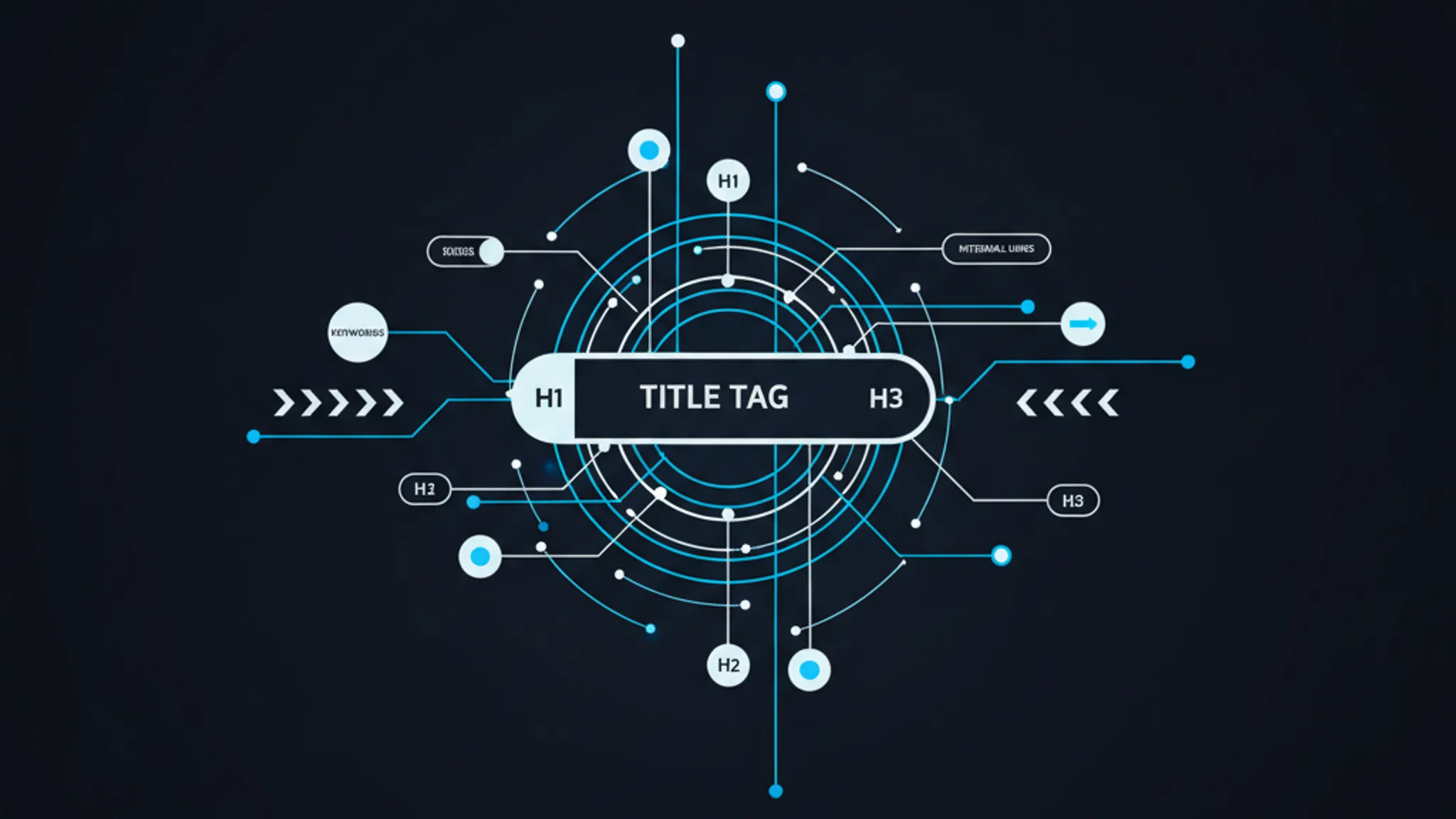
On-page optimization is the strategic practice of structuring a web page's content, HTML elements, and internal link signals to ensure search engines can accurately determine what the page is about and assess its relevance to a given search query. This optimization process includes optimizing title tags, meta descriptions, heading hierarchy, keyword placement, internal linking patterns, image attributes, URL structure, and semantic composition of the page body. When on-page optimization is executed consistently across all these elements, search engines receive clear, reinforced signals about the page's topic and whether it satisfies user search intent.
That definition matters because most people treat on-page optimization as a set of isolated tasks. Optimize the title tag here. Add some alt text there. But Google doesn't evaluate these elements in isolation. The algorithm cross-references signals across your page to build a coherent picture of what the page is about, what iPullRank's relevance engineering framework calls "aboutness." If your title tag says one thing and your headings say another, you've introduced ambiguity. Ambiguity kills rankings.
I wrote about this concept in depth when I covered how Google decides what your page is actually about. The short version: Google builds an internal representation of your page's topic using overlapping signals from every zone of your content. On-page optimization done right means making every zone point in the same direction.
Title tags are still the heaviest on-page signal
Title tags carry more ranking weight per character than any other on-page element. Google's own How Search Works documentation confirms that the presence of search query terms in the title remains one of the "most basic signals" of relevance.
The data backs this up. Across the top-ranking pages for competitive keywords, nearly all use the exact target keyword in their title tags. That's not a coincidence, and it's not a relic of old SEO. Title tags work because they sit at the intersection of multiple ranking systems. They influence click-through rate, which feeds back into engagement signals through systems like NavBoost. They provide the clearest topical signal to the indexing system. And they're the first thing a searcher sees, which means they directly affect whether your page gets a chance to prove itself.
Best practices that actually matter for title tags:
Keep them under 60 characters. Front-load your primary keyword. Make the title specific enough that a searcher knows what they'll get before clicking. And stop duplicating title tags across multiple pages. Each page needs its own title pointing to its own topic.
Meta descriptions don't rank, but they convert
Meta descriptions have zero direct correlation with rankings. A 2025 ranking factors study confirmed a 0.00 correlation between meta descriptions and search position. But well-optimized meta descriptions increase click-through rate by up to 22%, and click-through rate absolutely affects how your page performs over time.
Think of meta descriptions as your ad copy in the search results. You've got roughly 155 characters on desktop and 120 on mobile. The searcher is scanning ten results. Your meta description's job is to get the click by confirming that your page answers their specific question better than the alternatives.
Include your target keyword in the meta description, not because Google uses it for ranking, but because Google bolds matching terms in the snippet. That visual emphasis pulls the eye. Write in active voice. Be specific about what the page delivers.
Heading hierarchy tells Google how your ideas connect
Headings aren't just formatting. They're the structural skeleton that Google uses to understand the relationship between your ideas. Your H1 establishes the page's primary topic. Your H2s define the main subtopics. H3s break those subtopics into specific points. This hierarchy maps directly to how Google's NLP models parse content, something I explored when covering how Google's NLP systems break down your pages.
The mistake I see most often: heading tags used for visual styling instead of semantic structure. Someone makes a phrase an H2 because they want it to look bigger, not because it represents a distinct subtopic. Google reads those headings as topical signals regardless of why you used them. If your headings don't reflect the actual structure of your argument, you're sending confused signals.
Place secondary keywords in your H2 and H3 tags where they naturally fit. Each heading should preview the content immediately below it. And structure your headings so that if someone only read them, they'd get the complete outline of your page.
Keywords go in specific places for specific reasons
Keyword placement still matters, but not in the way most people practice it. You're not trying to hit a keyword density target. You're trying to place your keywords in the zones where Google assigns the most weight.
The zones that matter most, in rough order of impact: title tag, H1, first 100 words of body content, subheadings, and URL slug. These aren't arbitrary. Each of these zones gets special treatment in Google's indexing pipeline because they're statistically the most reliable indicators of a page's topic.
Google's information retrieval patents describe how term frequency within a document contributes to topical relevance scoring. The algorithm measures not just whether a term appears, but where it appears and how its frequency compares to other documents targeting the same query. Too few mentions and Google isn't confident your page is really about that topic. Too many and you've triggered over-optimization patterns that look like spam.
The balance point: use your primary keyword in the title, H1, and first paragraph. Use variations and related terms throughout the body. Let the keyword appear naturally in your headings when the section actually addresses that concept. And stop counting keyword density. It's not 2012.
Internal links distribute relevance and define relationships
Internal links are the most underutilized on-page optimization element I encounter in audits. Most sites treat them as navigation tools. In reality, internal links are how you tell Google which pages on your site are most important and how topics relate to each other.
Every internal link passes relevance signals from the linking page to the linked page. The anchor text of that link tells Google what the destination page is about. When you link from a blog post about heading hierarchy to your on-page optimization service page using descriptive anchor text, you're reinforcing the topical relationship between those pages.
iPullRank's research on entity richness and citation probability found that cited URLs averaged 1,800 words compared to 1,200 for non-cited ones, but word count alone wasn't the driver. It was entity density, the concentration of specific, named concepts within the content. Internal links function similarly. They increase the entity density of your site's link graph, making the relationships between your pages explicit rather than implied.
I covered the mechanics of how internal linking distributes authority in an earlier post on how authority actually flows. The takeaway: plan your internal links the same way you'd plan the structure of an argument. Each link should connect ideas that genuinely relate to each other.
Images need alt text and filenames that mean something
Image optimization is the most universally covered topic across every on-page SEO guide, and for good reason. Every competitor in the top ten addresses it. Search engines can't see your images the way humans do. They rely on file names, alt text, and surrounding context to understand what an image depicts and how it relates to the page topic.
Alt text serves two purposes: accessibility for screen reader users and relevance signals for Google's image indexing. Write alt text that describes the image accurately and, where natural, includes a relevant keyword or entity. Keep it under 125 characters. Don't stuff keywords into every alt attribute. That's spam, and Google recognizes the pattern.
File names should be descriptive, using hyphens to separate words. A file named "on-page-optimization-heading-structure.jpg" communicates more than "IMG_4392.jpg." This is a small signal, but small signals compound.
URL structure signals page topic before the click
Your URL is one of the first things a searcher sees in the results. A clean, keyword-inclusive URL like /articles/on-page-optimization immediately communicates the page's topic to both users and search engines. A messy URL with random parameters and session IDs does the opposite.
Keep URLs short, descriptive, and lowercase. Use hyphens between words. Include your primary keyword if it fits naturally. Reflect your site's hierarchy in the URL path. And once you've published a page, don't change the URL unless you have a very good reason and a proper redirect in place.
User experience is an on-page signal now
User experience metrics have become a measurable ranking input. Page experience signals now account for a significant portion of ranking weight, and the data on individual metrics is striking. Pages with Largest Contentful Paint under 1.0 seconds rank an average of 7.5 positions higher than pages over 4.0 seconds. Mobile page speed shows a 0.83 correlation with rankings versus 0.61 for desktop.
This means on-page optimization now extends beyond content and HTML. If your page loads slowly, if it shifts around during loading, if it's not usable on mobile, you're leaving ranking positions on the table. On-page optimization done right includes Core Web Vitals, mobile responsiveness, and above-the-fold content that immediately addresses the searcher's intent.
What "doing it right" actually means
The difference between on-page optimization that works and on-page optimization that doesn't comes down to coherence. Every element on your page needs to reinforce the same message. Your title tag, H1, headings, body content, internal links, images, and URL should all point to the same topic with the same level of specificity.
When I audit a page that isn't ranking despite having "good content," the problem is almost always signal fragmentation. The title targets one keyword variation. The headings wander into adjacent topics. The internal links point to unrelated pages. The URL doesn't match anything. Each element might look fine in isolation, but together they create noise instead of clarity.
On-page optimization done right is what happens when you understand that Google isn't reading your page the way a human does. It's extracting structured signals from specific zones, cross-referencing them against a query, and making a probabilistic judgment about whether your page is the best answer. Your job is to make that judgment as easy as possible.
The Nashville SEO Playbook goes deeper on how these on-page signals fit into a complete SEO strategy. And if you're dealing with a site where on-page optimization alone isn't moving the needle, the issue might be structural. That's where a proper on-page optimization service comes in, because sometimes you need someone who's looked at the data on a few hundred sites to tell you what your specific page is getting wrong.
The algorithm isn't mysterious. It's mechanical. And on-page optimization is where you feed the machine exactly what it needs to rank you.
Michael McDougald
Founder of Right Thing SEO, a math-driven SEO agency based in Nashville and Sarasota. Michael has spent 15+ years helping businesses achieve sustainable organic growth through data-driven strategies.
Learn more about Michael →